

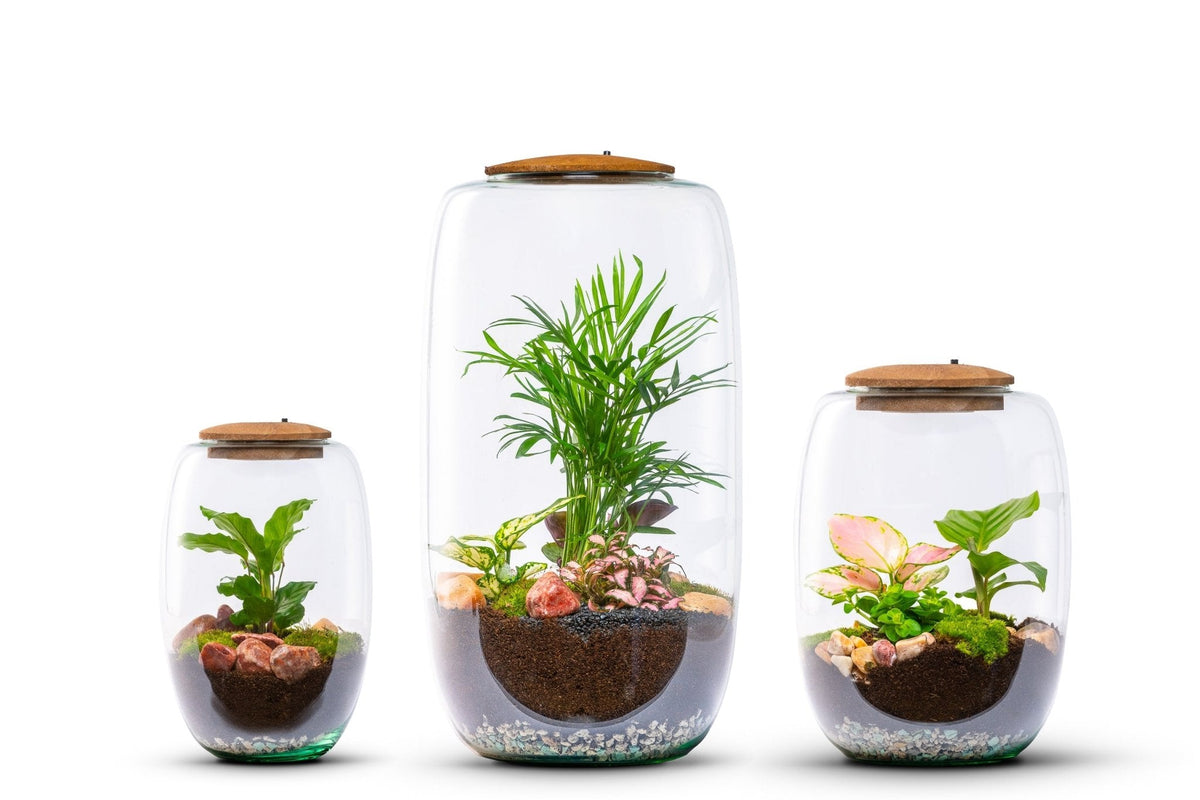
Calathea Care: The Complete Guide to Healthy Leaves
In this guide, I'll share my best Calathea care tips and tricks, straight from the heart of a plant enthusiast and Calathea expert.
1. Getting to know the Calathea
Before we delve deeper into care, let's first consider what makes the Calathea so special. Its intriguing leaf patterns and vibrant colours make this plant one of the most beloved houseplants in the Netherlands. Well-known species include Calathea Orbifolia, Calathea Ornata, Calathea Zebrina, and Calathea Rufibarba—each with its own leaf shape and markings, but largely similar care needs.

2. Choosing the perfect Calathea
The first step towards a healthy plant is selecting a good specimen. Look for a plant with firm, vibrant leaves without brown edges or yellow spots. Also, inspect the underside of the leaf, as early signs of issues like spider mites are first visible there. At The Green Bottle Garden, plants are carefully inspected for quality beforehand, but it's always wise to check the condition of the leaves yourself once you get home.
3. Is the Calathea toxic to cats and dogs?
A question we often get: Is the Calathea safe for pets? The good news is that the Calathea is not toxic to cats and dogs. Should your pet nibble on a leaf, in the worst case, it might cause mild stomach or intestinal irritation, but there's no risk of serious poisoning. This makes the Calathea one of the safer choices for households with animals—though it's always wise to keep your plant out of reach of curious feline noses, purely to prevent damage to the leaves.
4. Lighting for your Calathea
Calatheas thrive best in indirect light, which mimics their natural habitat under the rainforest canopy. Never place your Calathea in direct sunlight: the leaves will quickly burn and develop irreversible brown or white spots. A spot a few meters from a north or east-facing window, or behind a sheer curtain at a south or west-facing window, usually works best.
5. Watering: the basics
Watering your Calathea is simpler than you might think. Water as soon as the top inch of the soil feels dry, keeping the plant hydrated without becoming waterlogged. Preferably use room-temperature rainwater or filtered water: Calatheas are sensitive to the lime and fluoride in tap water, which often results in brown leaf edges.
6. Common leaf problems (and how to solve them)
Do you recognize any of the following symptoms in your Calathea? Below are the most common problems, their causes, and what you can do about them.
Why are my Calathea's leaves turning brown?
Brown edges or tips are usually a sign of overly dry air, hard tap water, or too much direct sunlight. Carefully remove affected parts and address the cause: more humidity, different water, or a shadier spot.
Why are my Calathea's leaves turning yellow?
Yellow leaves usually indicate overwatering or root rot. Check that the pot has good drainage and let the soil really dry out between waterings. A single yellow, older leaf at the bottom of the plant is normal and part of its natural growth cycle.
Why are my Calathea's leaves shrivelling?
Shrivelled, dried-out leaves usually indicate a lack of water or, more often, excessively low humidity indoors. Especially in winter, when the heating is on, the air can quickly become too dry for a Calathea. Increase the humidity (see chapter 8) and check if the soil is not consistently too dry.
Why are my Calathea's leaves curling up?
Curling leaves are often a reaction to too much direct sunlight or overly dry air—the plant tries to limit evaporation this way. Move your Calathea out of the sun and increase humidity. Underwatering can also cause curling leaves, so always check the soil first.
Why are my Calathea's leaves drooping?
Drooping, limp leaves usually indicate a water-related problem: both too much and too little water can cause this effect. First, feel the soil. If it's soaking wet, there's a good chance of overwatering or incipient root rot. If the soil is bone dry, water gently, and the plant often recovers within a day.
What is root rot and how do I recognize it?
Root rot occurs due to consistently wet soil, often in combination with a pot without good drainage. Signs include a musty smell from the pot, limp leaves that don't recover after watering, and brown, soft roots when repotting (instead of firm, white roots). Remove the plant from the pot, prune affected roots, and repot in fresh, well-draining soil.
8. Creating a humid, luxurious environment
Calatheas love high humidity, ideally around 50-60%. Place the plant on a tray with pebbles and water (ensure the pot itself isn't sitting in water), use a humidifier, or group your Calathea with other plants. Misting helps temporarily but is less effective than consistently more moisture in the air.
9. Soil and pot
Repot your Calathea into a pot slightly larger than its root ball and with good drainage holes. A beautiful pot or terrarium will truly showcase the plant. Choose a light, moisture-retaining potting mix specifically for houseplants, possibly supplemented with some perlite for extra drainage.
10. The right temperature
Keep your Calathea in a stable environment with temperatures between 18-24°C. Avoid drafts, cold windowsills in winter, and sudden temperature fluctuations—these are all common causes of limp or curling leaves.
11. Feeding during the growing season
Feed your Calathea every 4-6 weeks during the growing season (spring and summer) with a liquid houseplant fertilizer at half strength. In autumn and winter, when the plant is barely growing, you can stop fertilizing to prevent over-fertilization.
12. Pruning and maintenance
Maintain the beauty of your Calathea by carefully trimming away damaged or discoloured leaves. Always cut into the brown, discoloured part and leave as much green leaf intact as possible—this helps the plant heal faster and keeps it looking neat.
Frequently Asked Questions about Calathea
How often should I water my Calathea? On average, once or twice a week, but always check the soil first: only water when the top inch feels dry. In winter, the plant needs less water than in summer.
Is Calathea toxic to cats? No, Calathea is not known to be toxic to cats or dogs. Eating a leaf may at most cause mild stomach irritation.
Why do my Calathea's leaves close at night? This is normal behaviour and not a sign of stress. The Calathea moves its leaves based on the day-night rhythm (the so-called "prayer plant" behaviour) and folds them up at night to open again during the day.
How often should I repot my Calathea? On average, once every 1-2 years, or as soon as you see roots growing out through the drainage holes. Preferably repot in spring, at the start of the growing season.
Conclusion
Caring for your Calathea boils down to a few simple basic principles: indirect light, consistently moist soil, high humidity, and a stable temperature. With these tips, you'll not only maintain a healthy plant but also add that extra touch of green ambiance to your interior.
Deel:
Optimal care for Phalaenopsis: Practical tips