

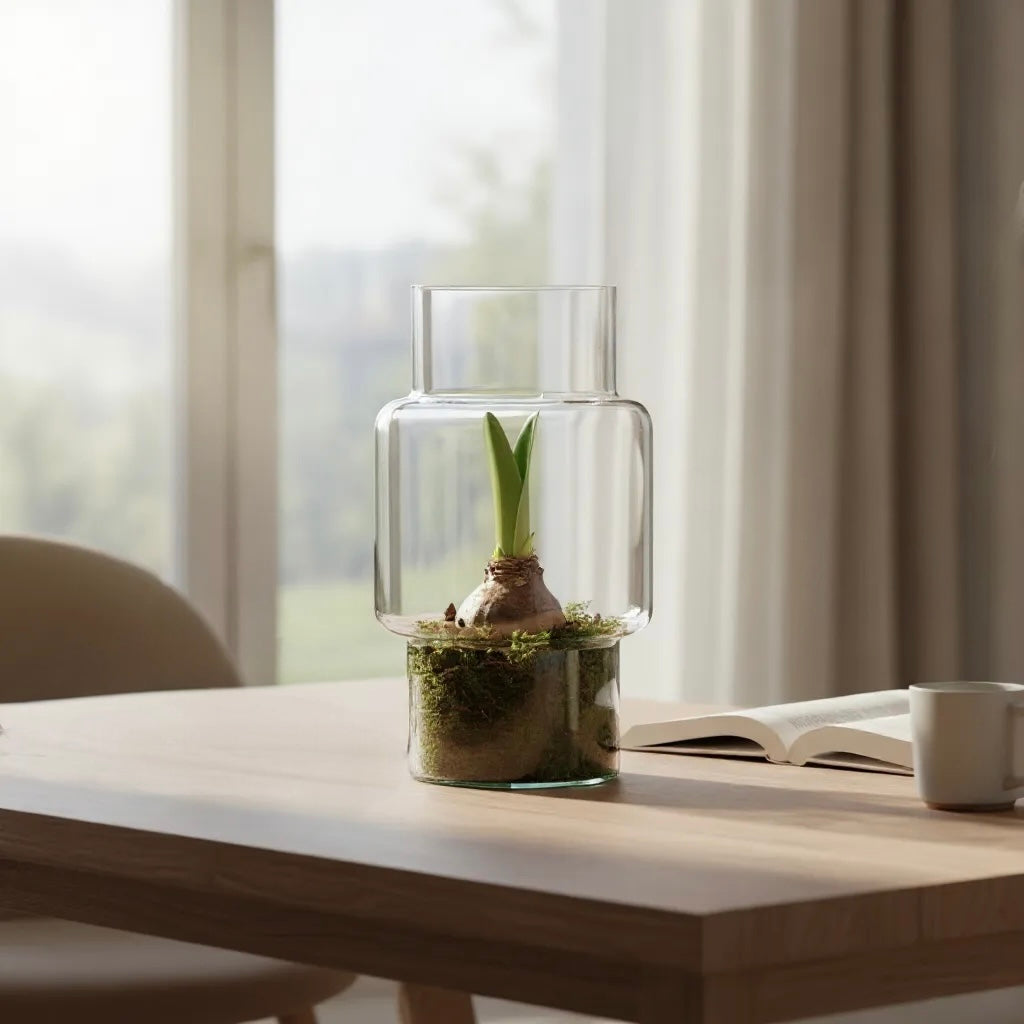
Amaryllis Bulb without Water: Caring for an Amaryllis bulb, how does it work, and Tips for a Blooming Plant without Too Much Care! The perfect plant gift
Are you looking for a beautiful, worry-free plant that instantly catches the eye? The Amaryllis bulb without water is the perfect choice! With its impressive flowers and minimal requirements, this plant is ideal for everyone, from beginner plant lovers to seasoned green thumbs. No more worrying about daily watering or difficult maintenance; the Amaryllis blooms beautifully with little effort. In this article, we share handy tips on how to bring this stunning bulb to life so you can quickly enjoy its colorful blossoms. Moreover, it makes a great gift for friends and family who want to brighten up their living space without too much maintenance. Discover how you can literally bring life and color into your home with an Amaryllis bulb without water – easy, stylish, and full of blooms!

What is an amaryllis bulb without water?
The amaryllis bulb is a special flower bulb known for its spectacular blooms. Originally from South America, the amaryllis is loved for its large, colorful flowers that bloom during the winter months. The bulb is full of energy and nutrients, allowing it to bloom without much external care. This makes the amaryllis a popular choice for both interior decoration and as a unique gift.
The flower itself comes in various colors, ranging from classic red to white, pink, and even striped varieties. Thanks to the impressive size of the flowers and the long stems on which they bloom, the amaryllis immediately draws attention in any room. The flowering time of the amaryllis can vary, but it usually takes a few weeks from bud to full bloom, providing a long-lasting period of color and beauty in the home.
In addition to its visual appeal, the amaryllis bulb is also a symbol of resilience and hope. The bulb remains alive during its dormancy period, waiting patiently for the right conditions to bloom again. This makes it not only a beautiful plant but also a meaningful gift for any occasion.
Benefits of an amaryllis bulb without water
One of the biggest advantages of an amaryllis bulb without water is the ease of care. Unlike many other plants that require regular watering and specific maintenance, the amaryllis bulb can bloom without water without needing much attention. This makes it an ideal plant for people who have little time or experience with gardening but still want to enjoy the beauty of flowers.
Furthermore, an amaryllis without water is a sustainable choice. Because the bulb already contains all the necessary nutrients, you do not need to add extra water or fertilizers. This means not only less maintenance but also less impact on the environment. Additionally, you can let the bulb rest after blooming and reuse it, contributing to a long-lasting and eco-friendly solution for indoor plants.
Another advantage is the versatility of the amaryllis bulb without water. You can place it almost anywhere in the house, as long as it gets enough light. This makes it easy to brighten up your interior and add a touch of nature without worrying about waterproofing or finding suitable pots. Whether you want to decorate a windowsill, table, or mantelpiece, the amaryllis bulb fits perfectly in any environment.
How can an amaryllis bloom without water?
The way an amaryllis bulb functions without water is both fascinating and simple. The bulb itself contains all the necessary nutrients and energy that the plant needs to bloom. This is because the bulb entered a dormant period after its previous flowering, during which it stored nutrients in its thick layers. When the right conditions are provided, the bulb begins to grow and bloom again without the need for extra water or fertilizers.
The process begins when the bulb receives sufficient light and warmth. This stimulates the growth of the flower stems and, ultimately, the flowers themselves. The bulb has stored enough moisture to support this growth, making extra watering unnecessary. This makes the amaryllis bulb without water not only easy to care for but also an intriguing example of nature's resilience and efficiency.
Another interesting aspect of the amaryllis bulb without water is that you can place it in various holders, such as glass vases, decorative bowls, or even just on a plate. This offers many creative possibilities to display the bulb and create a beautiful decorative element in your home. Because the bulb does not need water, you don't have to worry about leaks or finding a suitable pot with drainage holes. 
Where should you place an amaryllis? Light and temperature
To ensure that your amaryllis bulb without water blooms optimally, it is important to create the right environment. Although the bulb has few requirements, there are some factors that can promote growth and flowering. First, light is essential. Place the bulb in a spot with plenty of indirect sunlight, such as a windowsill or a well-lit room. Too much direct sunlight can dry out the bulb, so avoid spots where the sun shines directly on it all day.
Temperature also plays a crucial role. The ideal temperature for the growth of an amaryllis is between 18 and 24 degrees Celsius (64-75°F). Avoid cold drafts and extreme temperature fluctuations, as these can hinder growth. A constant, moderate temperature ensures that the bulb feels comfortable and can bloom optimally. If you place the bulb in a cool room, it can extend the flowering period, allowing you to enjoy the flowers for even longer. At The Green Bottle Garden, the glass provides protection from drafts. Take a look for inspiration
In addition to light and temperature, humidity is another important factor. Although the amaryllis bulb can bloom without water, an environment that is too dry is not ideal. Try to maintain the humidity in the room by, for example, using a humidifier or placing a small bowl of water near the bulb. This helps not only the bulb but also other houseplants and your own comfort.
Tips for caring for your amaryllis bulb
Although the amaryllis bulb without water requires little care, there are a few tips you can follow to ensure your plant blooms optimally. First, it is important to observe the bulb closely. Check regularly for signs of growth and any potential problems such as mold or rot. If you notice that the bulb is starting to shrink or shrivel, this may be a sign that it is too dry and needs a little moisture.
Another useful tip is to rotate the bulb occasionally. This ensures that all sides of the bulb receive light evenly, which can help with balanced growth. Usually, the bulb grows toward the light, so by rotating it regularly, you prevent the stems from growing crooked and ensure a beautiful, straight growth.
After flowering, you can let the bulb rest to prepare it for a new flowering period. Cut off the spent flowers and stems and let the bulb rest for a few weeks in a cool, dark place. After that, you can put it back in the light to start a new growth cycle. This rest period is crucial to give the bulb the chance to store new energy for the next bloom.

Amaryllis problems: mold, crooked stems, and failure to bloom
Although the amaryllis bulb without water usually blooms without issues, problems can sometimes occur. One of the most common problems is the formation of mold on the bulb. This can happen if the bulb becomes too damp or is kept in a space that is too humid. To prevent this, ensure that the bulb is in a well-ventilated area and avoid direct contact with water. If mold does form, you can carefully remove the affected parts and let the bulb dry.
Another common problem is the failure to bloom. If your amaryllis bulb shows no signs of growth after several weeks, it can have various causes. Check whether the bulb is receiving enough light and warmth and if the ambient temperature is not too low. Sometimes it can help to move the bulb to a warmer place for a few days to stimulate growth.
Also, the stems of the amaryllis can sometimes become too long and weak, causing them to fall over. This usually happens if the bulb receives too little light and the stems stretch in search of it. To prevent this, ensure that the bulb receives sufficient light and rotate it regularly. If the stems do become too long, you can support them with stakes or a decorative holder.
Amaryllis as a gift: at Christmas and other moments
The amaryllis bulb without water is a great gift for any occasion, but there are certain times of the year when it is especially appreciated. One of the best times to give an amaryllis bulb as a gift is around the holidays. The beautiful flowers bring color and joy to the dark winter months and are a perfect decorative element for Christmas and New Year celebrations.
Also for birthdays and anniversaries, an amaryllis bulb is a unique and meaningful gift. The long-lasting bloom and low maintenance make it a gift that keeps on surprising and bringing joy, long after other flowers have wilted. Moreover, you can personalize the bulb with a beautiful pot or decorative bowl, making the gift even more special.
Spring and autumn are also excellent times to give an amaryllis bulb. In the spring, the blooming of the amaryllis symbolizes new life and renewal, which fits perfectly with the season's mood. In the autumn, the warm colors of the flowers can add a touch of coziness to the interior, just in time for the colder months. Regardless of the season, an amaryllis bulb without water is always a welcome and stylish gift.
Decorating with an amaryllis bulb: in glass, on a bowl, or hanging
There are countless creative ways to display your amaryllis bulb without water at home, instantly brightening up your interior. A popular option is to place the bulb in a glass vase or jar. This not only protects the bulb but also lets you see the roots and growth of the plant, adding an interesting visual element. Choose a vase with a wide opening so that the bulb has enough room to grow.
Another creative presentation is placing the bulb on a decorative plate or bowl. Add some moss, stones, or other natural elements to create a miniature garden. This gives a rustic and natural look that fits perfectly with various interior styles. Moreover, you can easily change the location of the bowl to find the best light conditions.
For a truly unique display, you can hang the amaryllis bulb in a macramé plant hanger. This adds a boho-chic touch to your interior and makes optimal use of vertical space. Hang the bulb in a well-lit corner of the room or in front of a window to ensure enough light. This hanging presentation creates a striking and stylish accent in any room.
Conclusion: Amaryllis Bulb without Water: Tips for a blooming plant without too much care
The amaryllis bulb without water is a fantastic choice for anyone who wants to enjoy beautiful flowers without too much effort. With its impressive blooms and minimal care requirements, this plant is perfect for both beginner and experienced plant lovers. By creating the right environment and following a few simple care tips, you can enjoy colorful blossoms in your home time and time again.
Whether you are looking for a stylish decorative element for your own interior or a meaningful gift for a friend or family member, the amaryllis bulb without water offers an elegant and low-maintenance solution. With creative presentation options and the ability to bloom for several years, this plant is a lasting source of joy and beauty.
So, what are you waiting for? Bring an amaryllis bulb home and discover for yourself how easy and satisfying it can be to let this beautiful plant bloom. Enjoy the colorful flowers and simple care, and bring a touch of nature and elegance into your daily life.
Frequently asked questions about caring for an Amaryllis bulb
Questions often arise regarding the care and blooming of amaryllis bulbs. How long does it take for an amaryllis to bloom, how many weeks do the flowers remain beautiful, and does a bulb without water need care? Many people also wonder if an amaryllis can be used again after blooming and how to prevent long flower stems from falling over. Light, temperature, and the right location play an important role here. Below, we answer the most frequently asked questions so you know what to expect and can enjoy your amaryllis for as long as possible.
How long does an amaryllis bloom?
An amaryllis blooms on average for about 2 to 3 weeks. If the bulb has multiple flower stems or multiple buds, you can often enjoy the total bloom for 3 to 5 weeks.
Place the amaryllis in a bright, not-too-warm spot and avoid direct sunlight and heat from a radiator. This usually keeps the flowers beautiful for longer.
Do you have to water an amaryllis bulb without water?
No. You do not need to water an amaryllis bulb that is intended to bloom without water. The bulb itself contains sufficient moisture and nutrients to allow the flower stems and flowers to grow.
Where is the best place to put an amaryllis bulb?
Place the amaryllis in a bright spot with plenty of indirect daylight. Avoid prolonged, intense direct sunlight. A windowsill, table, or cupboard in a bright room is usually a good spot.
What temperature is best for an amaryllis?
A temperature between approximately 18 and 24 °C (64-75°F) is ideal. At a slightly cooler temperature, the flowers often develop more slowly, allowing you to enjoy the bloom for longer. Do not place the amaryllis directly next to a heater and avoid cold drafts.
How often should you rotate an amaryllis?
Rotate the amaryllis a quarter turn every few days. The flower stems grow toward the light. By regularly rotating the bulb, the stems will grow straighter.
How long does it take for an amaryllis to start blooming?
On average, it takes about 6 to 10 weeks for an amaryllis to be in full bloom. The exact growth speed depends on factors such as temperature and the amount of light.
Why is my amaryllis growing crooked?
An amaryllis naturally grows toward the light. If the light is mainly coming from one side, the flower stem may grow crooked. Therefore, rotate the amaryllis regularly and place it in a spot with sufficient daylight.
What should you do with an amaryllis after blooming?
When the flowers have faded, you can remove the spent flowers and cut off the flower stem. If you want to keep the bulb and try to make it bloom again, the bulb will need a new growth and rest period afterward.
Can you keep an amaryllis bulb?
Yes, you can try to keep an amaryllis bulb after it has finished blooming so that it can bloom again later. As soon as the flowers have faded, cut off the flower stalks, but leave the green leaves. The bulb uses the leaves to store new energy.
Next, place the bulb in a pot with potting soil, leaving about a third of the bulb exposed above the soil. Water occasionally and place the amaryllis in a bright spot. Allow the foliage to continue growing throughout the spring and summer.
In the autumn, gradually reduce watering. The leaves will eventually turn yellow and die back. This signals the start of the rest period. Place the bulb in a cool, dark place for about 8 to 10 weeks.
After this rest period, you can move the amaryllis back to a light, warmer spot and carefully start watering it again. With some patience, the bulb can sprout again and eventually bloom once more.
With a waxed amaryllis or a bulb from which the roots have largely been removed, the chance of re-blooming is usually smaller.
What should you do if there is mold on the amaryllis bulb?
A little bit of surface mold can occur if the bulb is kept too damp. Move the amaryllis to a dry, well-ventilated spot and ensure the bulb does not come into contact with water. Any surface mold can be carefully removed with a dry brush or a slightly coarse cloth. Afterward, let the bulb dry out completely.
Does an amaryllis need a lot of light?
An amaryllis needs sufficient daylight to grow sturdily and evenly. Plenty of indirect light is best. Too little light can cause the flower stalks to become long, weak, or crooked.
Deel:
Caring for the Fittonia
Scindapsus Pictus Care: Everything You Need to Know