

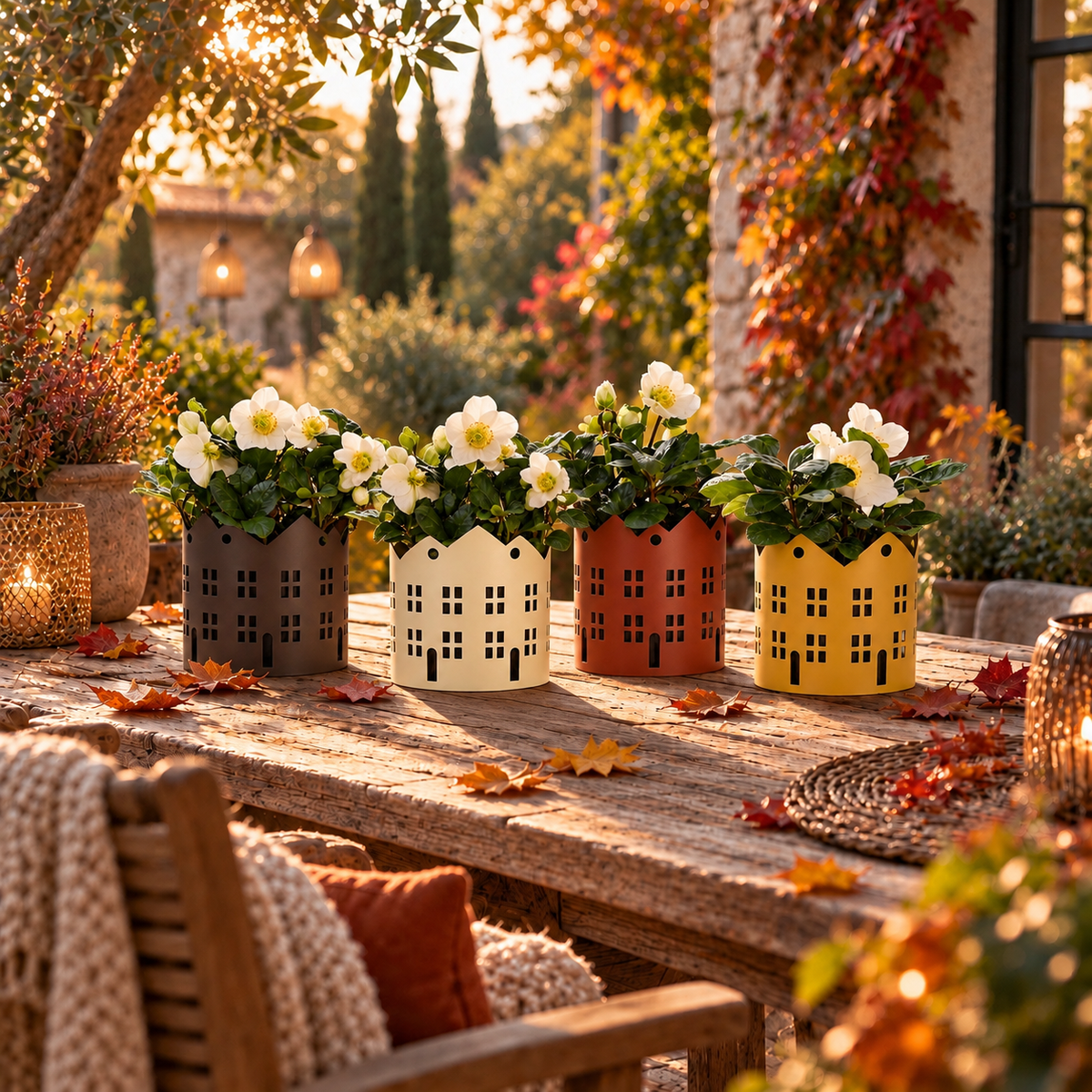
The Hellebore, also known as the Christmas rose, is a hardy perennial that blooms in winter, just when the rest of the garden is resting. With its graceful, nodding flowers in white, pink, purple, and green, the Hellebore brings color from December well into spring. The plant is hardy, lasts for years, and requires little care.
In this guide, you will read everything about caring for a Hellebore: the best location, whether to keep it indoors or outdoors, how much water it needs, when to prune it, and how to solve the most common problems.
What is a Hellebore?
The Hellebore is a winter-blooming perennial from the buttercup family, also known in Dutch as the Christmas rose, Lenten rose, or sneeze-wort. The plant is native to the mountain forests of Central and Southern Europe and Western Asia.
The two best-known species are:
Helleborus niger (Christmas rose):
White flowers that open around Christmas and bloom from December to March. This species is often sold in pots as a winter ornamental plant.
Helleborus orientalis (Lenten rose or Oriental Hellebore):
Flowers in pink, purple, white, and nearly black, sometimes speckled or double. This species blooms from February to April and is very robust in the garden.
In addition, you may also see Helleborus foetidus and Helleborus argutifolius in gardens, which stand out for their green flowers and grey-green, prickly leaves.
The ideal location for your Hellebore
The best location for a Hellebore is partial shade, in moist but well-drained soil. In nature, the plant grows under trees and shrubs, and that is where it feels most at home in the garden as well.
Light:
Choose a spot in partial or light shade, for example under a shrub or deciduous tree. In winter, the plant will get enough light to bloom, and in summer, it is protected from harsh sun. Full sun in summer will scorch the leaves.
Temperature:
The Hellebore likes cool weather and is hardy down to about -20 °C. Frost and snow are not a problem; the flowers may droop briefly but will recover when it thaws.
Soil:
The plant grows best in humus-rich, slightly calcareous soil that retains moisture without becoming waterlogged. Mix heavy clay or poor sandy soil with compost or leaf mold before planting.
Moving:
A Hellebore does not like to be moved. Therefore, choose a good spot from the start. If you must move it, do so in the autumn and take a large root ball with you.
Hellebore indoors or outdoors?
A Hellebore is an outdoor plant, but you can enjoy it indoors for a few weeks. If you buy a Christmas rose in a pot in December, you can temporarily place it in your home as decoration.
Caring for a Christmas rose indoors:
Place the plant in a cool, light room with a maximum temperature of 15 °C, such as a hallway or cool windowsill. In a warm living room, the flowers will wilt quickly. Keep the potting soil slightly moist and do not place the plant next to the radiator.
Moving it outdoors after a few weeks:
Move the plant outside after two to three weeks. First, let it acclimate for a few days in a sheltered spot, such as a covered patio, and then plant it in the garden or in a large pot.
Hellebore in a pot outdoors:
A Hellebore also grows well in a pot or planter on a patio or balcony. Choose a pot with a minimum diameter of 30 cm with a hole in the bottom, so that excess water can drain away.
Watering your Hellebore
A Hellebore needs consistently moist soil, but cannot tolerate "wet feet."
Frequency:
In the garden, the plant usually gets enough rainwater. Provide extra water during dry periods, especially in the spring and summer. A Hellebore in a pot dries out faster: check the soil weekly and water it if the top few centimeters feel dry.
After planting:
Water a newly planted Hellebore regularly for the first few weeks so that the roots take hold well.
Prevent waterlogging:
Standing water in the pot or soggy soil causes root rot. Ensure there is a drainage hole and, if necessary, a layer of gravel or hydro-pellets at the bottom of the pot.
Fertilizing Hellebore
A Hellebore requires little nutrition: fertilizing twice a year is enough.
When:
Apply fertilizer in the autumn, before the buds appear, and once more after blooming in the spring.
Type of fertilizer:
Use compost, leaf mold, or an organic granular fertilizer for perennials. Sprinkle it around the plant and work it in lightly. For a Hellebore in a pot, you can give liquid plant food at half strength once a month during the growing season.
Too much nitrogen results in a lot of leaves but few flowers, so stick to a small amount.
Pruning Hellebore: when and how?
The best time to prune a Hellebore is from late December to early February, just before the new flower buds emerge from the ground.
Removing old leaves:
For the Helleborus orientalis, cut the old leaves down to the ground. This makes the flowers more visible and reduces the risk of leaf spot disease. The new foliage will grow back on its own after blooming.
Pruning a Christmas rose:
For the Helleborus niger, you only need to remove damaged, brown, or spotted leaves. You can do this throughout the year.
After blooming:
If you want the plant to self-seed, leave the seed pods. If you do not, cut off the spent flower stems in April or May.
Note:
Wear gloves when pruning. The plant sap can irritate the skin.
Hellebore blooming season: when does the Christmas rose bloom?
The Hellebore blooms in winter and early spring, from December to April, depending on the species.
| Species | Blooming season | Flower color |
|---|---|---|
| Helleborus niger (Christmas rose) | December – March | white, later light pink |
| Helleborus orientalis (Lenten rose) | February – April | pink, purple, white, nearly black |
| Helleborus foetidus | January – April | light green with red-brown edge |
How long do the flowers stay beautiful?
A Hellebore blooms for six to ten weeks. The flowers do not wilt like those of other plants: they slowly turn green or dark red and remain graceful for weeks afterward.
Hellebore in summer:
After blooming, new leaves grow and the plant goes into a resting phase during the summer. Water during warm, dry periods and ensure shade so the leaves do not burn. In the autumn, the plant begins to form new buds again.
The most common Hellebore problems (and how to solve them)
Most Hellebore problems are caused by too much water, too much sun, or diseased leaves that are left on the plant.
Hellebore is drooping
During frost, the plant lets its flowers and leaves droop to protect itself. As soon as it thaws, it stands upright again. If the plant is drooping at normal temperatures, the soil is too dry: give it water.
Black spots on the leaves
This is usually leaf spot disease, a fungus that occurs especially in wet periods. Cut away affected leaves immediately and discard them with general waste, not on the compost heap.
Yellow or brown leaves
This often indicates too much sun, drought, or wet feet. Move the plant to a shadier spot and check that the water can drain properly.
Hellebore is not blooming
A young or newly moved plant often needs a year to adjust. Planting too deep, too much shade, or too much nitrogen can also inhibit blooming. Plant the crown level with the soil.
Aphids
In spring, aphids can appear on the young flower stems. Spray them off with a strong jet of water or use an organic remedy.
Most problems can be prevented with partial shade, well-draining soil, and timely removal of old leaves.
Hellebore facts
The Hellebore is not only a hardy winter bloomer but also a plant with a special history.
Hardy
The Hellebore is hardy down to about -20 °C and even blooms through snow.
Toxic
All parts of the Hellebore are toxic to humans, cats, and dogs. Keep the plant out of reach of children and pets and wash your hands after pruning.
Long lifespan
A Hellebore can last ten years or longer in a good spot and becomes fuller every year.
Sneeze-wort
The Dutch name "nieskruid" (sneeze-wort) comes from the past: the dried, finely ground root was used as sneezing powder.
Christmas legend
According to an old legend, the first Christmas rose grew from the tears of a shepherd girl who had no gift for the baby Jesus.
Hellebore at The Green Bottle Garden
At The Green Bottle Garden, we work with the Helleborus niger, the true Christmas rose. Its pure white flowers open in the middle of winter and look beautiful in glass and ceramic. This is how we turn every Christmas rose into a unique, living winter work of art.
After blooming, you can take the Hellebore out of the vase and plant it in the garden or in a large pot outside. This way, you can enjoy it year after year.
Would you like a Hellebore in glass or as a winter gift? View our collection and discover which living work of art fits your interior.
Click here for the Hellebore collection
Frequently asked questions about Hellebore care
Where is the best place to put a Hellebore?
Place a Hellebore in partial shade, for example under a shrub or deciduous tree, in humus-rich soil that drains well. The plant does not handle full sun in summer and a waterlogged soil well.
Can a Hellebore be kept indoors?
A Hellebore can be kept indoors for two to three weeks in a cool, light room of no more than 15 °C. After that, move it outside, as it is a garden plant.
When should you prune a Hellebore?
Prune a Hellebore from late December to early February, before the flower buds appear. Cut the old leaves down to the ground. You may remove diseased or damaged leaves all year round.
When does a Hellebore bloom?
The Christmas rose (Helleborus niger) blooms from December to March. The Lenten rose (Helleborus orientalis) blooms from February to April.
How often should you water a Hellebore?
In the garden, rainwater is usually enough; only provide extra water during droughts. Give a Hellebore in a pot water as soon as the top few centimeters of soil feel dry.
Is a Hellebore hardy?
Yes. The Hellebore is hardy down to about -20 °C and can stay outside all year round.
Why is my Hellebore drooping?
During frost, a Hellebore lets its flowers and leaves droop; it recovers on its own after thawing. If it droops at normal temperatures, the plant needs water.
Is a Hellebore toxic to cats and dogs?
Yes. All parts of the Hellebore are toxic to humans and pets. Keep the plant out of reach of cats, dogs, and children.
What do you do with a Hellebore in the summer?
The plant rests in the summer. Provide shade, water during droughts, and leave the leaves on so the plant can store energy for the next bloom.
How long does a Hellebore last?
In a good spot, a Hellebore can last ten years or longer. The plant grows larger every year and will bloom more abundantly.
Deel:
Caring for Ficus Ginseng: Everything About This Popular Bonsai
Storing amaryllis bulbs: how to make your amaryllis bloom again next year